

News
SCI Helper: How I Used AI to Create a Tool That Saves Time and Nerves

created by Gemini

Vlado Balko
27. 10. 2025
Development
Vibe Coding with Necessity: SCI and the Consultant's Reality
The SCI Helper for Chrome/Edge isn't just another extension—it's an indispensable tool for SCI consultants. Without exaggeration: executing development cycles in SAP Cloud Integration would be significantly more difficult and slower without it. The analogy is stark: attempting to work without it is like sledding in summer—possible, but fundamentally inefficient. With the Helper, it's simply a streamlined workflow.
The true power of SCI Helper lies in its plugin architecture and extensibility. This instantly transforms it into a community-driven project, leveraging collective knowledge to expand its capabilities. Furthermore, it fosters a proactive development culture: rather than simply criticizing, you are empowered to build your desired functionality yourself. And that was precisely my motivation.
The Problem That Had to Be Solved: Connectivity Test Amnesia
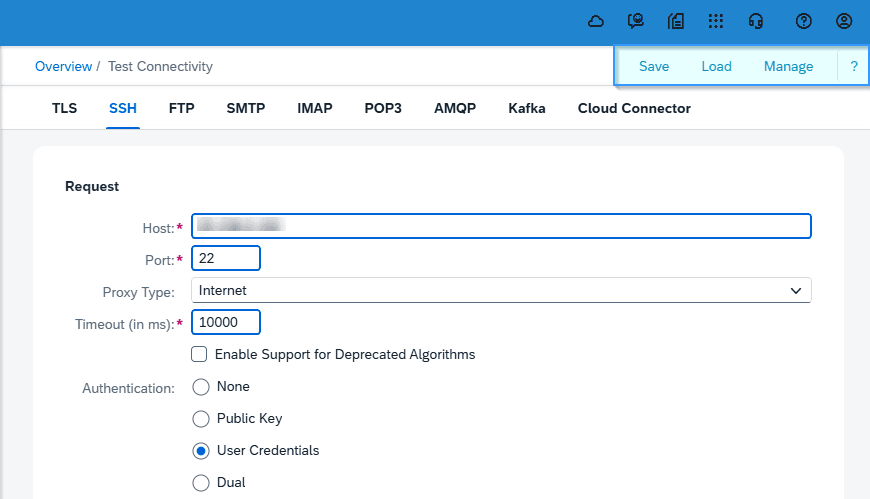
A critical, yet frustrating, feature exists in SCI: the Connectivity Test. It allows you to validate partner system connectivity from the correct tenant IP address and with the right credentials, which is often not feasible from a local workstation.
The Problem: The connection form has multiple fields that must be populated manually on every attempt. The height of this inefficiency is when you diligently populate the form, only to discover your session has expired. The page reloads, and all input is lost, forcing you to start over. This persistent friction point had been on my to-do list for several years.
Agent Awakening: Claude Code as the Project Trigger
It remained a conceptual fix until I began evaluating the capabilities of Claude Code (Anthropic's agent for contextual coding). I required a practical, real-world project for a Proof of Concept (PoC), not just another trivial "Arkanoid" variation. I immediately remembered that persistent form-filling issue.
Jumping into the project was classic "early-stage vibe coding." I bypassed formal requirements gathering—no thorough analysis, no PRD (Product Requirement Document). I initiated development directly.
Version 1 & 2: I quickly realized I lacked proficiency in managing the AI's context and development constraints, and I failed to manage it effectively. I preferred to discard two initial iterations at a certain stage and restart. I had to better understand the operational context and the specific architecture of a Chrome extension.
Version 3 (The Breakthrough): Fortunately, the third development cycle was viable.
Post-Vibe Coding: From Rough Code to Specification
This was followed by several long evenings of refactoring and hardening. Although I still wasn't using a formal structure like GitHub SpecKit, I was approaching its principles in practice:
UI/UX Refinement for a better user experience was prioritized.
Code Optimization for more robust and reliable data persistence.
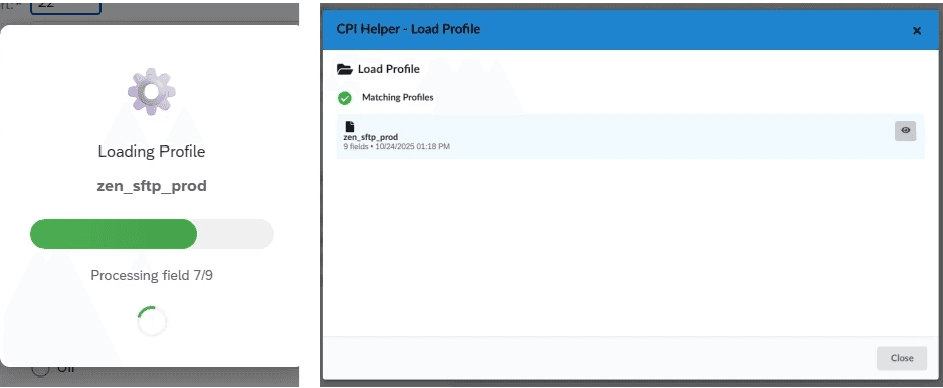
The final fix for asynchronous field filling: This was the primary technical challenge—how to populate fields that are rendered conditionally only after the previous field is populated? This demanded a more precise architectural plan to handle DOM monitoring and asynchronous events.
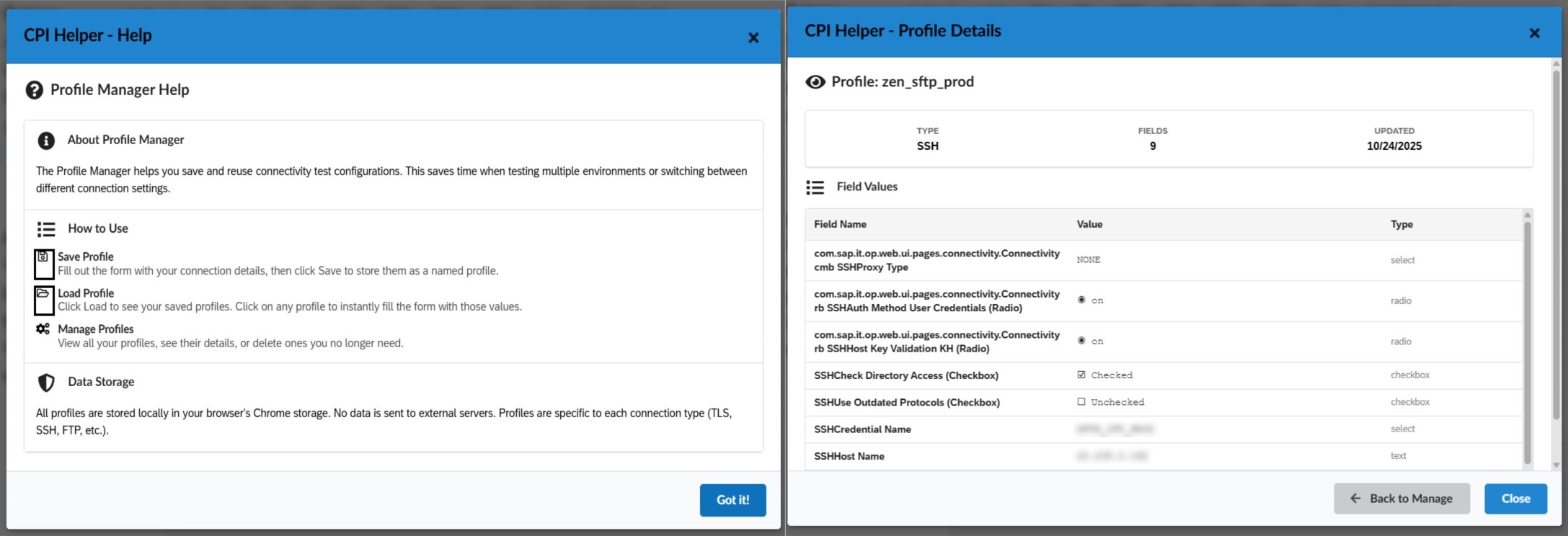
Adding comprehensive help documentation.
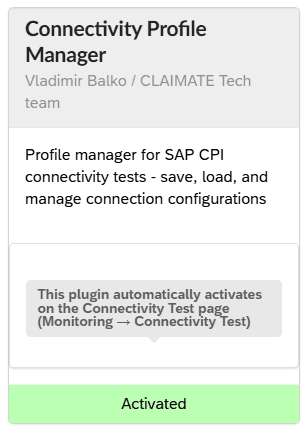
The plugin for managing and persisting Connectivity Test values was complete.
Community Reward: Pull Request and The Completed List
After a few days of intensive local testing (together with my colleague Jirka Fridrich), I was ready. I submitted a Pull Request to the SCI Helper repository. This act was significant—it was the final, formal step that transitioned a personal frustration into a public, community solution.
It didn't take long for a message to arrive from Dominic Beckbauer—the maintainer of SCI Helper—confirming he appreciated the plugin's utility and would merge it into the next release (3.21.0). That confirmation wasn't just approval; it was the moment the project moved from a private fix to a shared asset.
For me, the community aspect is fundamental. I am where I am today largely thanks to the accessibility of open-source information and tools—including the SCI Helper extension itself. Submitting the plugin was my way of contributing back to the ecosystem that has supported my own growth. It's the philosophy of open development: what you leverage, you also return. With this contribution, I fulfilled two major goals:
I engineered a tool I use daily that saves me time and mental overhead.
I contributed back to the community of SAP BTP Integration, a commitment I also honor through my blog.
The current development revolution isn't just about speed; it's about solving real problems. The SCI Helper plugin is proof that AI can push a years-delayed project from a backlog item to live deployment.
The SCI Helper plugin is now available to all consultants in the latest version of the extension: https://chromewebstore.google.com/detail/sap-cpi-helper/epoggeaemnkacpinjfgccbjakglngkpb?hl=en&pli=1
For further details about the code and contributions, visit the SCI Helper GitHub repository: https://github.com/dbeck121/CPI-Helper-Chrome-Extension.
News
SCI Helper: How I Used AI to Create a Tool That Saves Time and Nerves
created by Gemini
Vlado Balko
27. 10. 2025
Development
Vibe Coding with Necessity: SCI and the Consultant's Reality
The SCI Helper for Chrome/Edge isn't just another extension—it's an indispensable tool for SCI consultants. Without exaggeration: executing development cycles in SAP Cloud Integration would be significantly more difficult and slower without it. The analogy is stark: attempting to work without it is like sledding in summer—possible, but fundamentally inefficient. With the Helper, it's simply a streamlined workflow.
The true power of SCI Helper lies in its plugin architecture and extensibility. This instantly transforms it into a community-driven project, leveraging collective knowledge to expand its capabilities. Furthermore, it fosters a proactive development culture: rather than simply criticizing, you are empowered to build your desired functionality yourself. And that was precisely my motivation.
The Problem That Had to Be Solved: Connectivity Test Amnesia
A critical, yet frustrating, feature exists in SCI: the Connectivity Test. It allows you to validate partner system connectivity from the correct tenant IP address and with the right credentials, which is often not feasible from a local workstation.
The Problem: The connection form has multiple fields that must be populated manually on every attempt. The height of this inefficiency is when you diligently populate the form, only to discover your session has expired. The page reloads, and all input is lost, forcing you to start over. This persistent friction point had been on my to-do list for several years.
Agent Awakening: Claude Code as the Project Trigger
It remained a conceptual fix until I began evaluating the capabilities of Claude Code (Anthropic's agent for contextual coding). I required a practical, real-world project for a Proof of Concept (PoC), not just another trivial "Arkanoid" variation. I immediately remembered that persistent form-filling issue.
Jumping into the project was classic "early-stage vibe coding." I bypassed formal requirements gathering—no thorough analysis, no PRD (Product Requirement Document). I initiated development directly.
Version 1 & 2: I quickly realized I lacked proficiency in managing the AI's context and development constraints, and I failed to manage it effectively. I preferred to discard two initial iterations at a certain stage and restart. I had to better understand the operational context and the specific architecture of a Chrome extension.
Version 3 (The Breakthrough): Fortunately, the third development cycle was viable.
Post-Vibe Coding: From Rough Code to Specification
This was followed by several long evenings of refactoring and hardening. Although I still wasn't using a formal structure like GitHub SpecKit, I was approaching its principles in practice:
UI/UX Refinement for a better user experience was prioritized.
Code Optimization for more robust and reliable data persistence.
The final fix for asynchronous field filling: This was the primary technical challenge—how to populate fields that are rendered conditionally only after the previous field is populated? This demanded a more precise architectural plan to handle DOM monitoring and asynchronous events.
Adding comprehensive help documentation.
The plugin for managing and persisting Connectivity Test values was complete.
Community Reward: Pull Request and The Completed List
After a few days of intensive local testing (together with my colleague Jirka Fridrich), I was ready. I submitted a Pull Request to the SCI Helper repository. This act was significant—it was the final, formal step that transitioned a personal frustration into a public, community solution.
It didn't take long for a message to arrive from Dominic Beckbauer—the maintainer of SCI Helper—confirming he appreciated the plugin's utility and would merge it into the next release (3.21.0). That confirmation wasn't just approval; it was the moment the project moved from a private fix to a shared asset.
For me, the community aspect is fundamental. I am where I am today largely thanks to the accessibility of open-source information and tools—including the SCI Helper extension itself. Submitting the plugin was my way of contributing back to the ecosystem that has supported my own growth. It's the philosophy of open development: what you leverage, you also return. With this contribution, I fulfilled two major goals:
I engineered a tool I use daily that saves me time and mental overhead.
I contributed back to the community of SAP BTP Integration, a commitment I also honor through my blog.
The current development revolution isn't just about speed; it's about solving real problems. The SCI Helper plugin is proof that AI can push a years-delayed project from a backlog item to live deployment.